Distributed Time-Sensitive Systems
Fundamental limits require distributed time-sensitive systems to balance timely responses (availability) and consistency (agreement across the system) in the presence of communication delays and synchronization uncertainty. I will show why current widely-used approaches such as publish-and-subscribe, actors, remote procedure calls, and shared memory are inadequate, and I will offer an alternative. Our alternative separates logical time from physical time and provides a model of computation that delivers deterministic behavior under clearly stated assumptions, enables fault detection and handling when the assumptions are violated, and enables balancing availability and consistency in an application-specific way. Our mechanism is implemented as an extension of the Lingua Franca coordination language and is capable of realizing many established distributed computing patterns, including PTIDES, Chandy-and-Misra, TimeWarp, logical execution time (LET), and conflict-free replicated data types (CRDTs). It can even realize the above inadequate approaches, but it adds to these mechanisms better control over timing, bounded-time fault detection, and the option to make them more deterministic, all within a single semantic framework.
Bio:
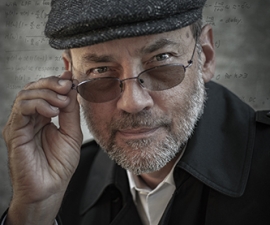
Edward A. Lee is Professor of the Graduate School and Robert S. Pepper Distinguished Professor Emeritus in Electrical Engineering and Computer Sciences (EECS) at the University of California at Berkeley, where he has been on the faculty since 1986. He is the author of seven books, some with several editions, including two for a general audience, and hundreds papers and technical reports. Lee has delivered more than 200 keynote and other invited talks at venues worldwide and has graduated 40 PhD students. Professor Lee’s research group studies cyber-physical systems, which integrate physical dynamics with software and networks. His focus is on the use of deterministic models as a central part of the engineering toolkit for such systems. He is the director of iCyPhy, the Berkeley Industrial Cyber-Physical Systems Research Center and of the Berkeley Ptolemy project. From 2005-2008, he served as Chair of the EE Division and then Chair of the EECS Department at UC Berkeley. He has led the development of several influential open-source software packages, notably Ptolemy and its various spinoffs. He received his BS degree in 1979 from Yale University, with a double major in Computer Science and Engineering and Applied Science, an SM degree in EECS from MIT in 1981, and a Ph.D. in EECS from UC Berkeley in 1986. From 1979 to 1982 he was a member of technical staff at Bell Labs in Holmdel, New Jersey, in the Advanced Data Communications Laboratory. He is a co-founder of BDTI, Inc., where he is currently a Senior Technical Advisor, and has consulted for a number of other companies. He is a Fellow of the IEEE, was an NSF Presidential Young Investigator, won the 1997 Frederick Emmons Terman Award for Engineering Education, received the 2016 Outstanding Technical Achievement and Leadership Award from the IEEE Technical Committee on Real-Time Systems (TCRTS), the 2018 Berkeley Citation, and the 2019 IEEE Technical Committee on Cyber-Physical Systems (TCCPS) Technical Achievement Award.